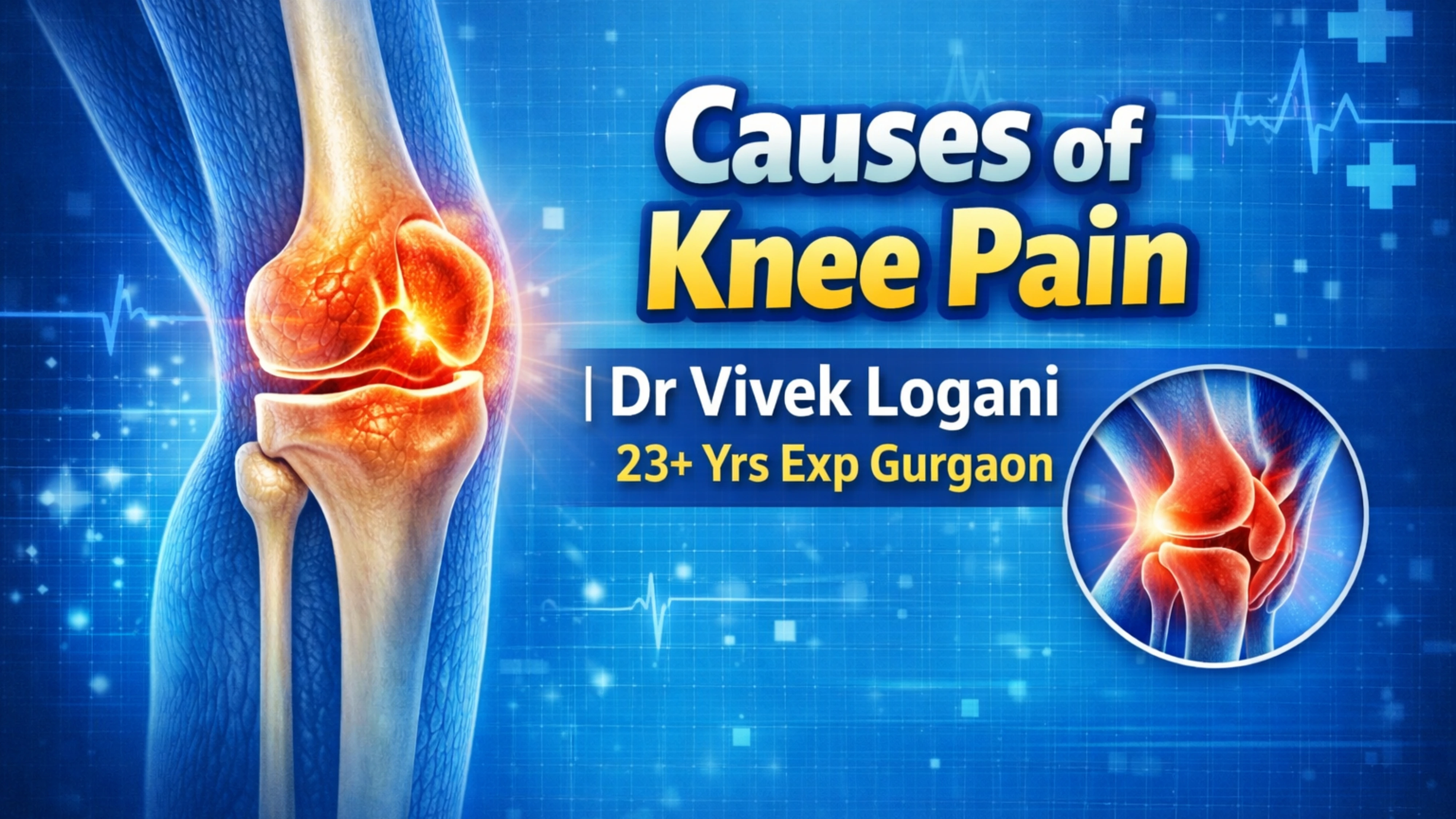
Top 7 Causes of Knee Pain and When to Worry
Knee pain is one of the most common problems I see in my Gurgaon clinic. From young professionals working long desk hours in Cyber City to runners training in Leisure Valley Park, knee discomfort is no longer just an "old age issue."
Understanding the causes of knee pain early can prevent long-term damage. Many people ignore mild pain, thinking it will settle. Sometimes it does. But sometimes, it's your body asking for attention.
Let's simplify this.
Understanding Knee Pain Symptoms
Before we talk about reasons, recognize the warning signs.
Common knee pain symptoms include:
Pain while walking or climbing stairs
Swelling around the joint
Stiffness after sitting
Clicking or locking sensation
Instability or "giving way"
If pain is mild and temporary, rest may help. But persistent symptoms deserve evaluation.
Top 7 Causes of Knee Pain
1. Osteoarthritis
This is one of the most common causes of knee pain, especially after 45–50 years. The cartilage cushioning your knee gradually wears out. Patients complain of morning stiffness and pain that worsens by evening. In Gurgaon, rising obesity and sedentary lifestyle accelerate this condition.
Early diagnosis helps delay progression significantly.
2. Ligament Injuries (ACL/PCL)
Sudden twisting during sports, gym workouts, or even a bad fall can tear ligaments. ACL injuries are common in young adults. If you feel instability or your knee gives way while walking, don't ignore it. These are common causes of knee pain in young adults, especially active individuals.
Timely MRI and proper treatment prevent long-term instability.
3. Meniscus Tear
The meniscus acts as a shock absorber. A sudden squat or twist can tear it. Symptoms include locking, clicking, and pain while bending. Many patients describe difficulty getting up from a chair.
It is one of the common causes of knee pain and swelling in middle-aged individuals.
4. Patellofemoral Pain Syndrome
If you feel pain while climbing stairs or getting up from low seating, this may be the reason. Often seen in women and young adults, it is related to muscle imbalance or kneecap alignment issues. This explains many cases of causes of knee pain while climbing stairs.
Simple physiotherapy can work wonders if diagnosed early.
5. Rheumatoid Arthritis
Unlike osteoarthritis, this is an autoimmune condition. It causes joint swelling, warmth, and prolonged morning stiffness. It often affects both knees. Women are more prone, making it one of the causes of knee pain in ladies that shouldn't be ignored.
Blood tests help confirm the diagnosis.
6. Tendinitis
Tendinitis is an overuse injury. Common in runners, gym-goers, and even people who suddenly increase activity. Pain is usually localized below the kneecap. It worsens with activity. Rest and guided rehabilitation usually resolve it.
7. Referred Pain (Hip Problems Like AVN)
Sometimes, the knee is innocent. Conditions like AVN (Avascular Necrosis) of the hip can cause pain felt in the knee. Patients get knee treatment repeatedly without relief because the real problem lies in the hip.
If knee examination looks normal but pain persists, we always evaluate the hip joint.
When to See a Doctor for Knee Pain
Not every pain needs urgent care. But certain signs are red flags.
See a specialist if you have:
Persistent swelling
Severe pain that limits walking
Instability or giving way
Locking of the knee
Fever with joint pain
Pain lasting more than 2–3 weeks
Early consultation prevents minor issues from becoming major surgeries.
Knee Pain Treatment Options in Gurgaon
Treatment depends entirely on diagnosis. There is no "one solution for all."
Options include:
- Medicines for inflammation and pain relief
- Physiotherapy to strengthen muscles and improve alignment
- Injections (like hyaluronic acid or PRP) in selected cases
- Arthroscopy for ligament or meniscus injuries
- Knee replacement only when arthritis is advanced and non-surgical options fail
Most patients improve without surgery when treated at the right time.
FAQs
1.) Can lack of calcium cause knee pain?
Calcium deficiency can weaken bones over time, but it does not directly cause knee pain. However, low bone density may increase fracture risk, which can cause discomfort.
2.) Can lack of vitamin D cause knee pain?
Yes. Vitamin D deficiency can lead to generalized bone and muscle pain, including around the knees. Blood tests can confirm deficiency, and supplementation usually helps.
3.) Can AVN of hip cause knee pain?
Yes. AVN of the hip often presents as knee pain due to nerve pathways. If knee treatment is not helping, hip evaluation is important.
Trusted Knee Care in Gurgaon
With over 23 years of orthopedic experience, I have managed thousands of knee conditions across age groups. As a knee specialist practicing in Gurgaon, my focus is always accurate diagnosis before treatment.
Every knee pain is different. A careful clinical examination, appropriate imaging, and patient education are essential.
If you're unsure about your symptoms, a simple consultation can bring clarity and peace of mind.
Conclusion
Understanding the causes of knee pain helps you act early and wisely. Whether it's arthritis, ligament injury, or referred pain from the hip, timely evaluation makes treatment simpler and recovery faster.
If your knee pain is affecting daily life in Gurgaon's fast-paced routine, don't wait for it to worsen. Early guidance can save months of discomfort.
📍 Address: Paras Healthcare, Gurgaon (NCR) and Delhi
📧 Email: info@jointreplacementcentre.com
📞 Call: +91 99996 00099
🌐 Website: jointreplacement.info
Leave a Comment